I.
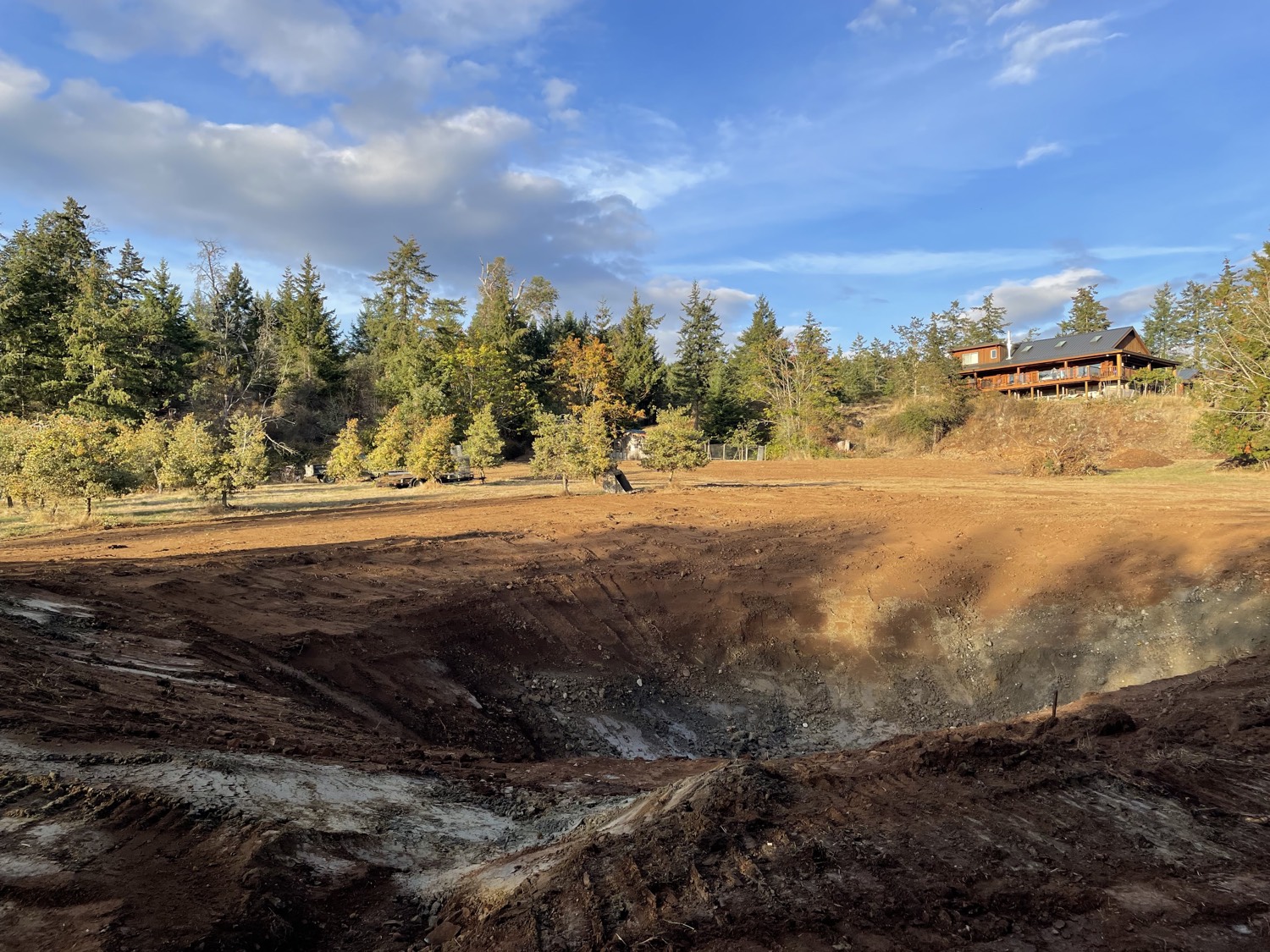
Read the land
We walk the place first. Wet ground, dry ground, and where a house is already in the water’s way.
II.
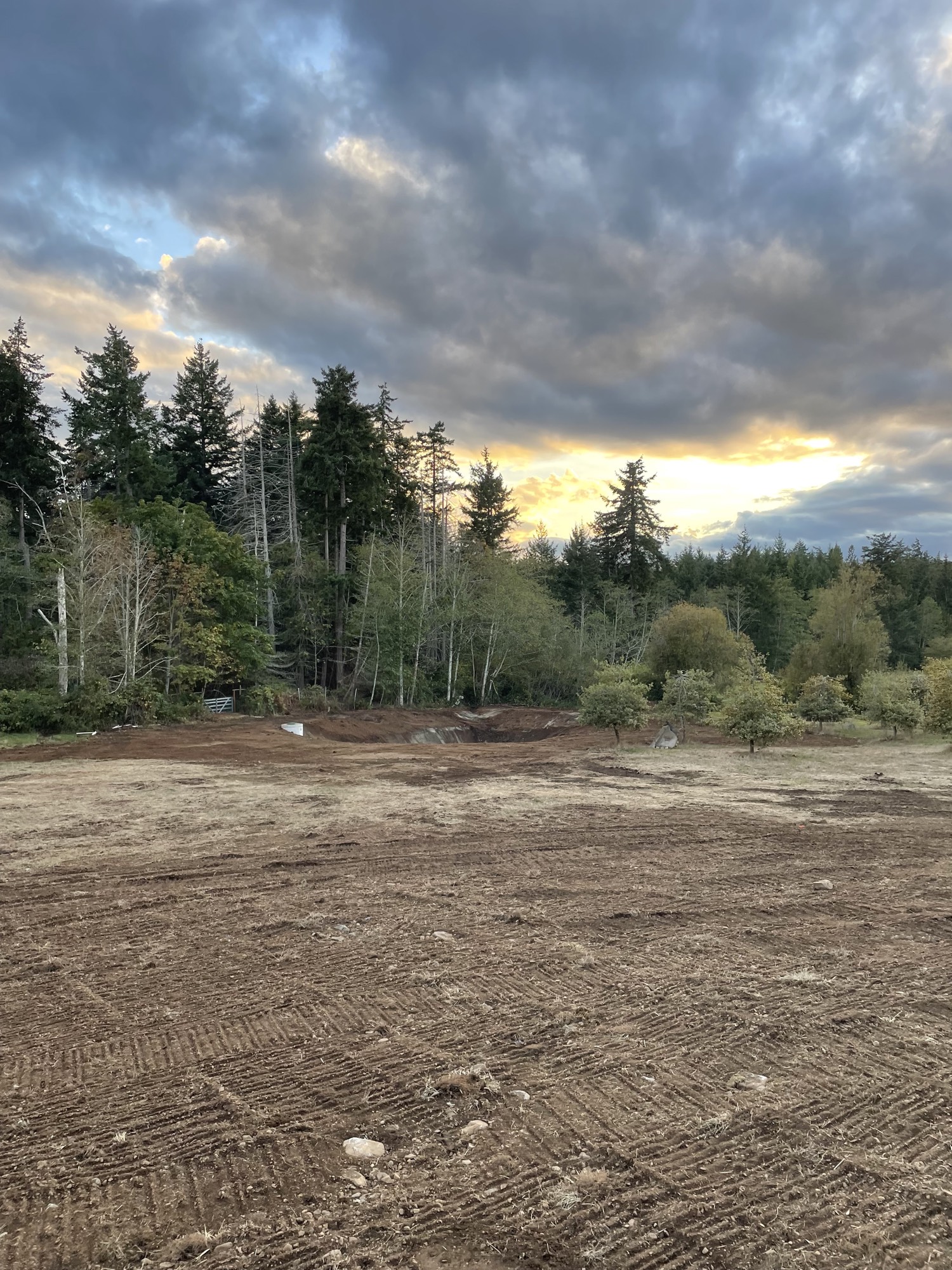
Slow the water
Then we shape the slope so rain slows down instead of running off with the soil.
III.
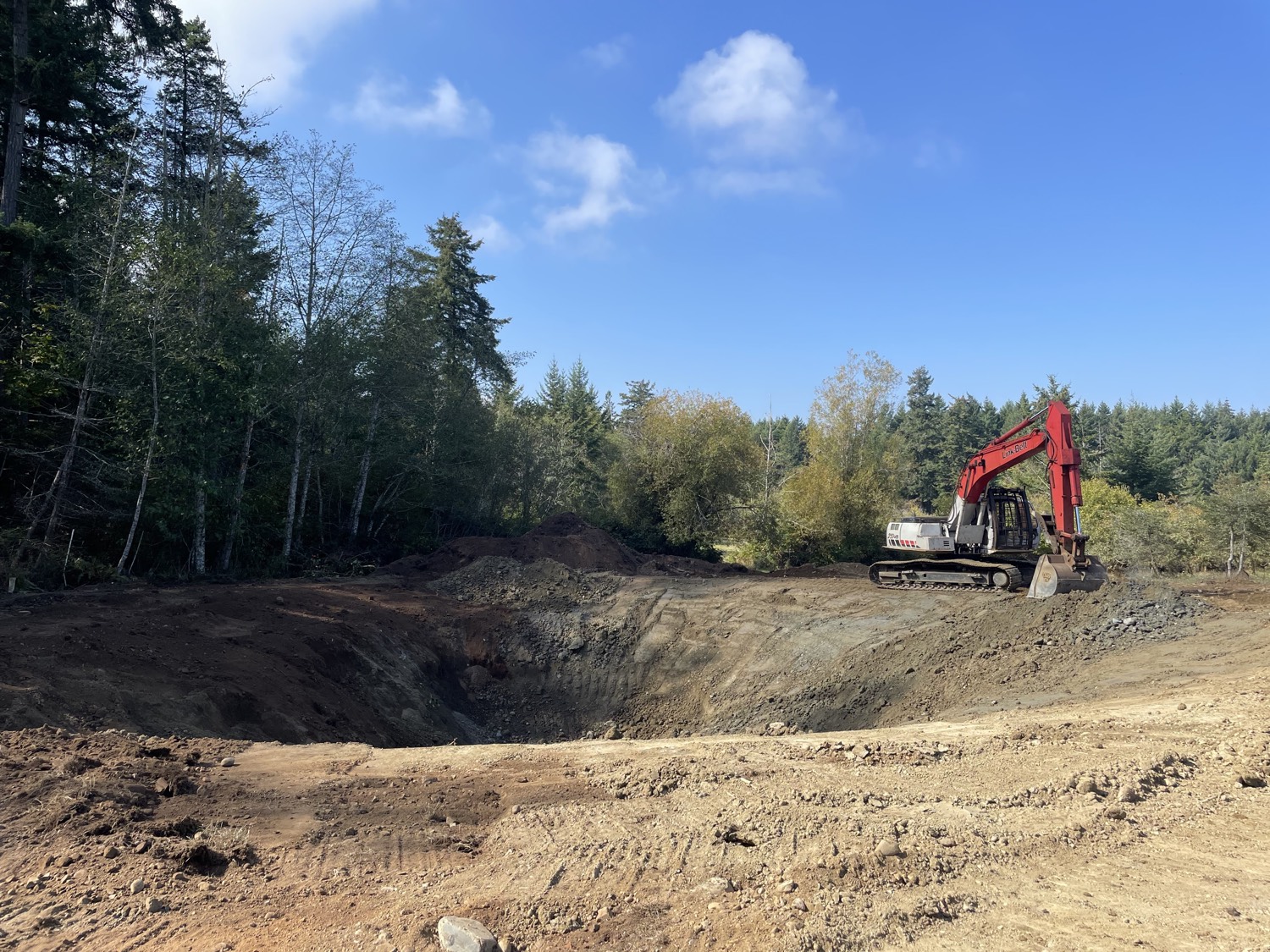
Store it in a pond
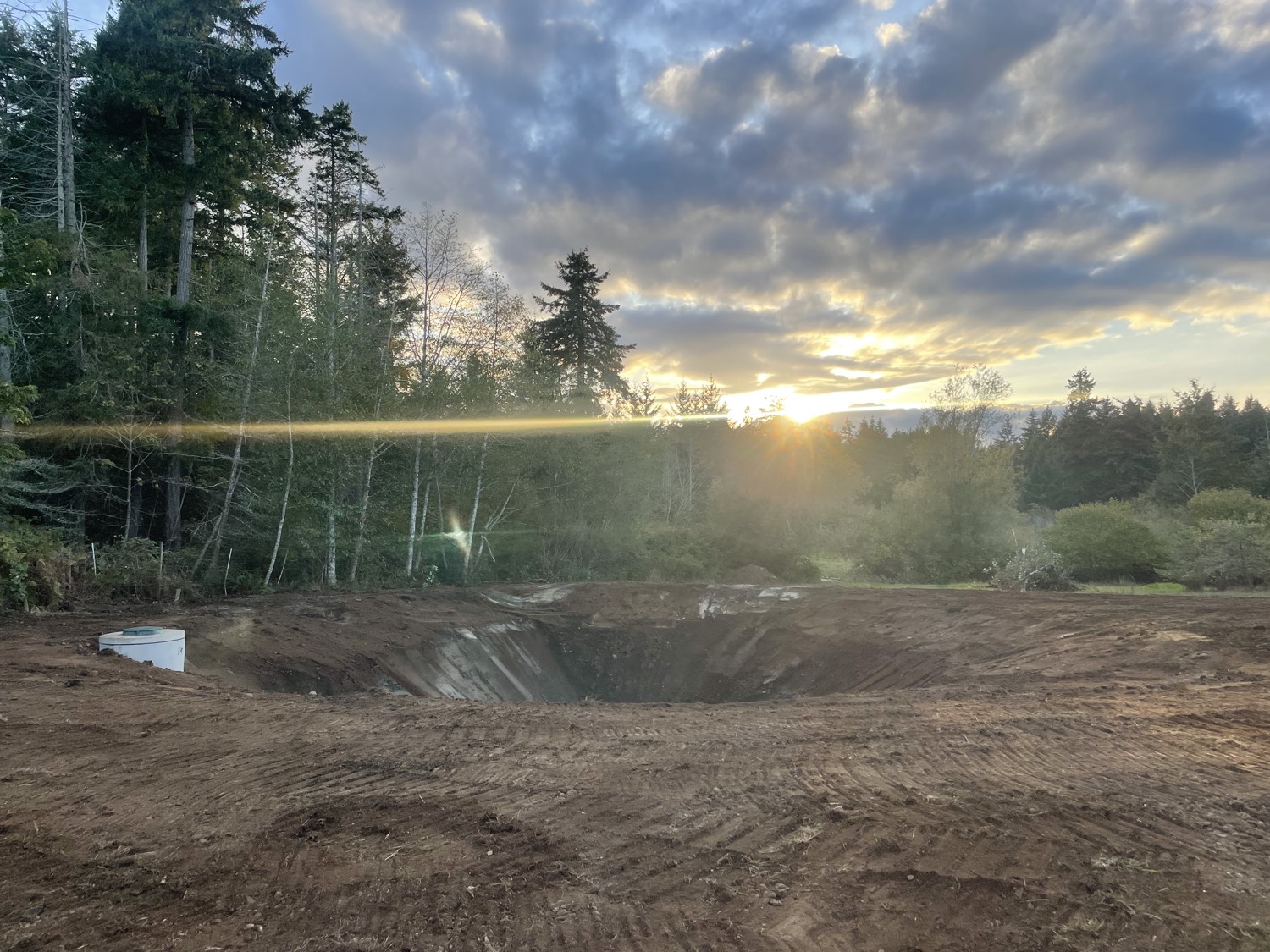
The pond goes in the low spot. Deep enough to use for the garden and a fire.
IV.
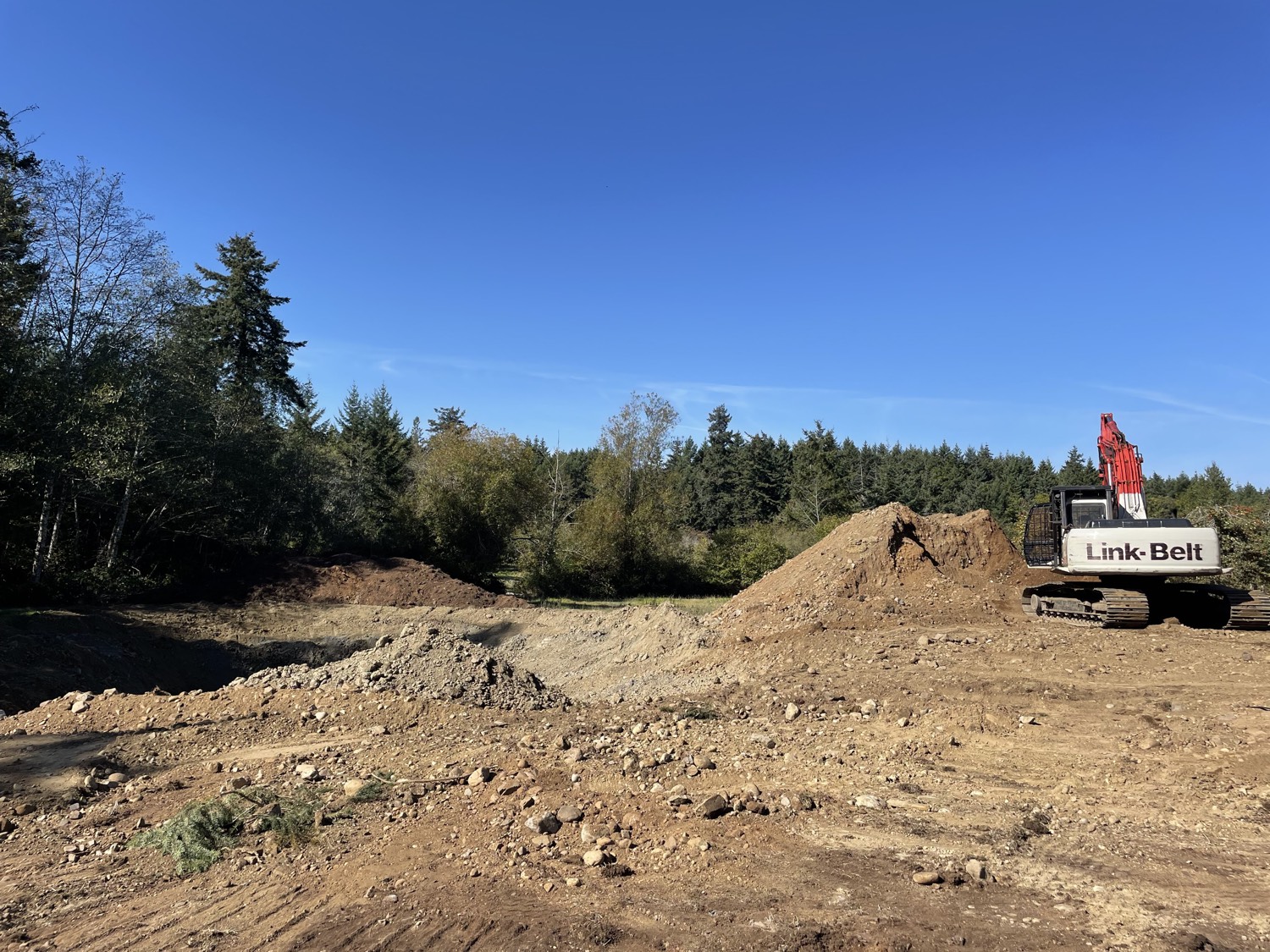
Store it in the soil
The soil stays. Those piles are the banks and the new ground around the pond.
V.
Keep the cycle
You take water from the ring. What you don’t use stays, and the ground around the pond gets wetter.
Before anyone digs
We walk the land and write down the work. That note, once you sign it, is the agreement for your property. This page is just how the job usually goes.
In B.C. a pond can need a water licence. Work that touches a stream can need a separate notice. Plenty of ponds need neither. We say which is which before you pay for paperwork you don’t need.
The soil stays on the property unless we agree it leaves.